
The Joint Venture That Reshaped UK Greyhound Media
Premier Greyhound Racing is the joint venture that fundamentally altered how British greyhound racing reaches its audience. Formed by Entain — the parent company of Ladbrokes and Coral — and Arena Racing Company, PGR holds exclusive media rights for twelve UK greyhound stadiums from 1 January 2024 through to 31 December 2029. Before PGR, the commercial landscape of greyhound media was fragmented: individual tracks negotiated their own deals with bookmakers and broadcasters, resulting in inconsistent coverage, varying stream quality, and limited bargaining power. PGR replaced that patchwork with a single, centralised operation.
The deal matters because media rights revenue is the financial engine that drives prize money, welfare investment, and stadium maintenance at PGR tracks. Without it, most licensed stadiums would struggle to fund the quality of racing programme that punters and regulators expect. Understanding PGR’s structure — who pays, who receives, and what the deal requires — is essential context for anyone following UK greyhound racing in 2026.
Entain and ARC: How the Deal Works
The deal was first signed in 2021 and took effect on 1 January 2024. Its structure is a joint venture — not a simple licensing agreement. Entain and ARC share ownership of PGR, which means both parties have a commercial stake in maximising the value of the greyhound content produced at the twelve stadiums. Entain brings its bookmaker distribution network: Ladbrokes and Coral shops, online platforms, and the relationships with other major retail operators. ARC brings the stadiums themselves, along with the racing programme, the dogs, the trainers, and the infrastructure that makes the product possible.
PGR has invested more than £2.5 million into Open Race prize funds across its stadiums — a figure that represents a step change from pre-deal spending levels. That investment flows directly into the competition programme: higher prizes attract better dogs, which produce better racing, which generates more betting turnover, which funds further investment. The virtuous cycle only works if the betting public engages with the product, which is why the quality of the broadcast — consistent camera work, professional commentary, and reliable streaming — is as important to PGR’s model as the prize money itself.
Kevin Robertson, Managing Director of ARC’s Media and International Division, described the agreement as representing a new era of collaboration between the horse and greyhound racing industries and their bookmaker customers. That framing is significant: it positions greyhound racing not as an isolated sport but as part of a broader racing media ecosystem, sharing distribution infrastructure with horse racing content from ARC’s extensive portfolio of racecourses.
The financial terms of the deal are not fully public, but the commercial logic is visible in the outcomes. Bookmakers that carry PGR content pay for the rights to stream races to their customers, and that revenue is split between Entain and ARC according to the joint venture agreement. The twelve stadiums receive their share through the ARC side of the partnership, and the PGR board allocates a portion to prize money enhancement and broadcast quality.
The Twelve PGR Stadiums and What They Offer
The PGR network covers twelve of the eighteen GBGB-licensed stadiums operating in the UK, giving it control over the majority of top-tier greyhound content. The roster includes Nottingham, Monmore Green, Romford, Towcester, Hall Green, Henlow, Yarmouth, Belle Vue, Doncaster, Newcastle, and other venues that between them host the bulk of the sport’s Category 1 events and Open race programme.
The distribution of PGR content reaches punters through five major bookmaker platforms: Ladbrokes, Coral, William Hill, Paddy Power, and Betfred. Each of these operators provides live streaming of PGR meetings to customers with active accounts — typically requiring either a funded account or a placed bet on the meeting. The coverage is consistent across all five platforms because the source feed comes from PGR’s centralised broadcast operation rather than from individual stadiums.
The six stadiums outside the PGR network operate under separate commercial arrangements, typically distributing their content through SIS (Satellite Information Services) to betting shops and online operators. These non-PGR tracks tend to stage more BAGS meetings and fewer headline events, though some — notably the tracks that host smaller Category 2 and Category 3 competitions — produce high-quality racing in their own right. The distinction between PGR and non-PGR tracks is primarily commercial rather than sporting: it determines how and where the racing is broadcast, not the quality of the dogs on the track.
For punters following Nottingham specifically, the PGR membership means that every Monday evening, Friday evening, Wednesday morning, and Thursday morning meeting is available to stream live through any of the five bookmaker partners. It also means that Nottingham’s Category 1 events — the Select Stakes, Puppy Classic, Eclipse, and Breeders’ Stakes — receive the full PGR broadcast treatment, with enhanced pre-race coverage and wider promotional reach than they would receive under an independent media arrangement.
How PGR Changed Prize Money, Coverage and Punter Access
The measurable impact of PGR on the sport is visible in three areas: prize money, broadcast quality, and accessibility.
Prize money at PGR stadiums has increased since the deal took effect. At Nottingham, the Select Stakes reached a record £12,500 first prize in 2024, and the Puppy Classic matched it. These figures are directly attributable to PGR’s investment strategy, which channels media rights revenue into competition purses to raise the profile of flagship events. The effect isn’t limited to headline competitions: graded race prize money at PGR tracks has also seen modest increases, improving the economics for trainers operating at the lower and middle tiers of the sport.
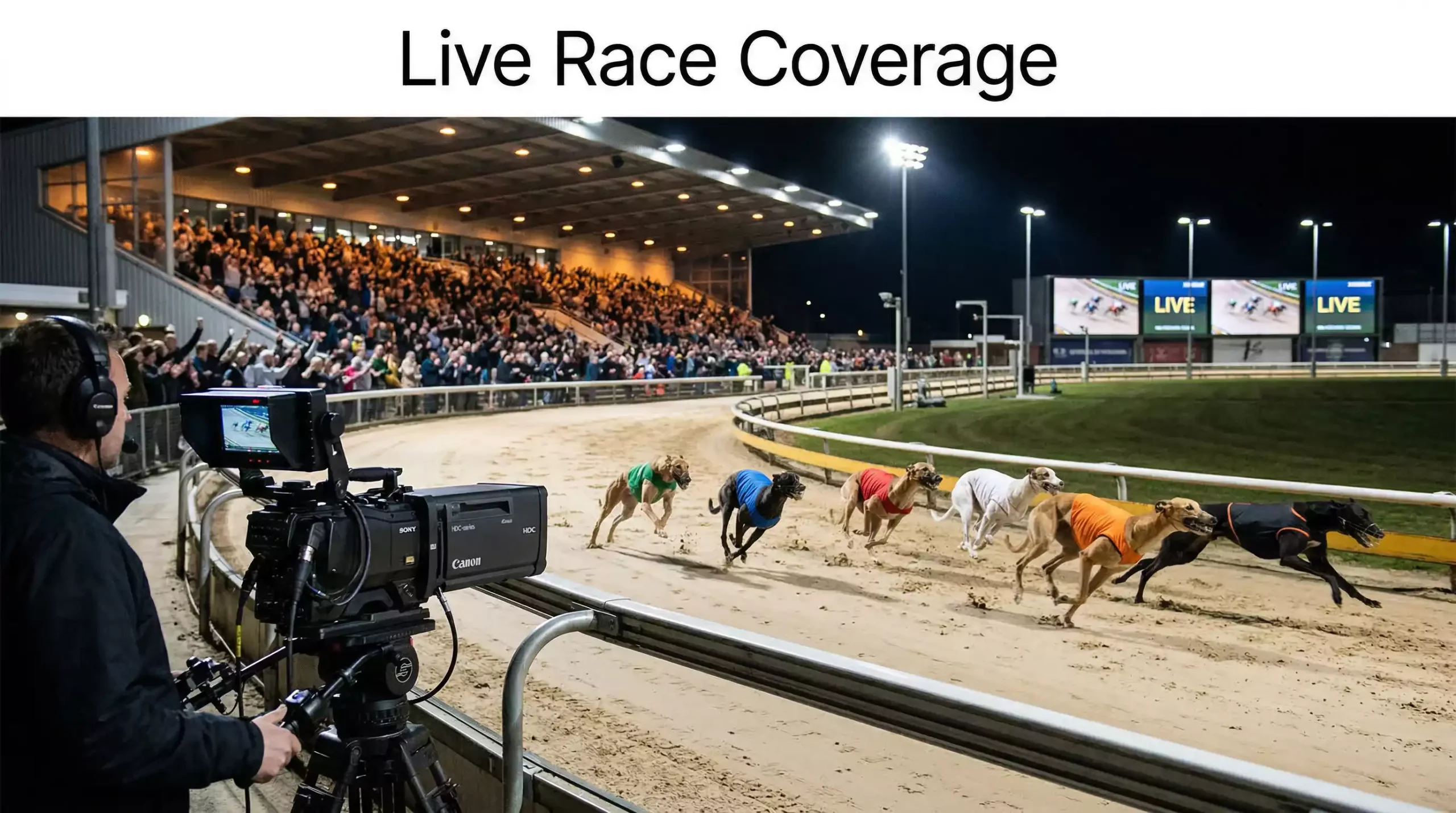
Broadcast quality has improved notably. Pre-PGR, the standard of greyhound racing streams varied wildly — some venues produced crisp, well-commentated coverage while others offered little more than a grainy camera feed. PGR’s centralised production model has standardised the broadcast to a consistent level across all twelve stadiums, with professional commentary, multiple camera angles, and a presentation style that makes greyhound racing look like the competitive sport it is rather than a budget filler between horse races.
Accessibility is the area where the change is most obvious to the average punter. Before PGR, finding a stream for a specific greyhound meeting required navigating a maze of platform-specific arrangements. Now, any of the five major bookmakers will show you any PGR meeting on any device, with minimal friction. That simplification has removed one of the biggest barriers to casual engagement with the sport — the sheer inconvenience of finding where to watch. Whether that increased accessibility translates into a growing audience remains to be seen, but the infrastructure for growth is now in place in a way it wasn’t before 2024.
The longer-term question is whether PGR’s model can sustain itself through the full six-year term of the deal. The joint venture’s viability depends on bookmaker turnover on greyhounds remaining high enough to justify the media rights expenditure. If betting volumes continue the gradual decline seen in recent years, the economics of the deal will tighten — and the prize money increases that PGR has delivered could prove temporary rather than permanent. For now, though, PGR represents the most significant commercial investment in UK greyhound racing in a generation, and its effects are visible at every one of its twelve stadiums every racing night.
The wider context is set out in our Nottingham dog results guide.
What it means for viewers is in live streams.
