

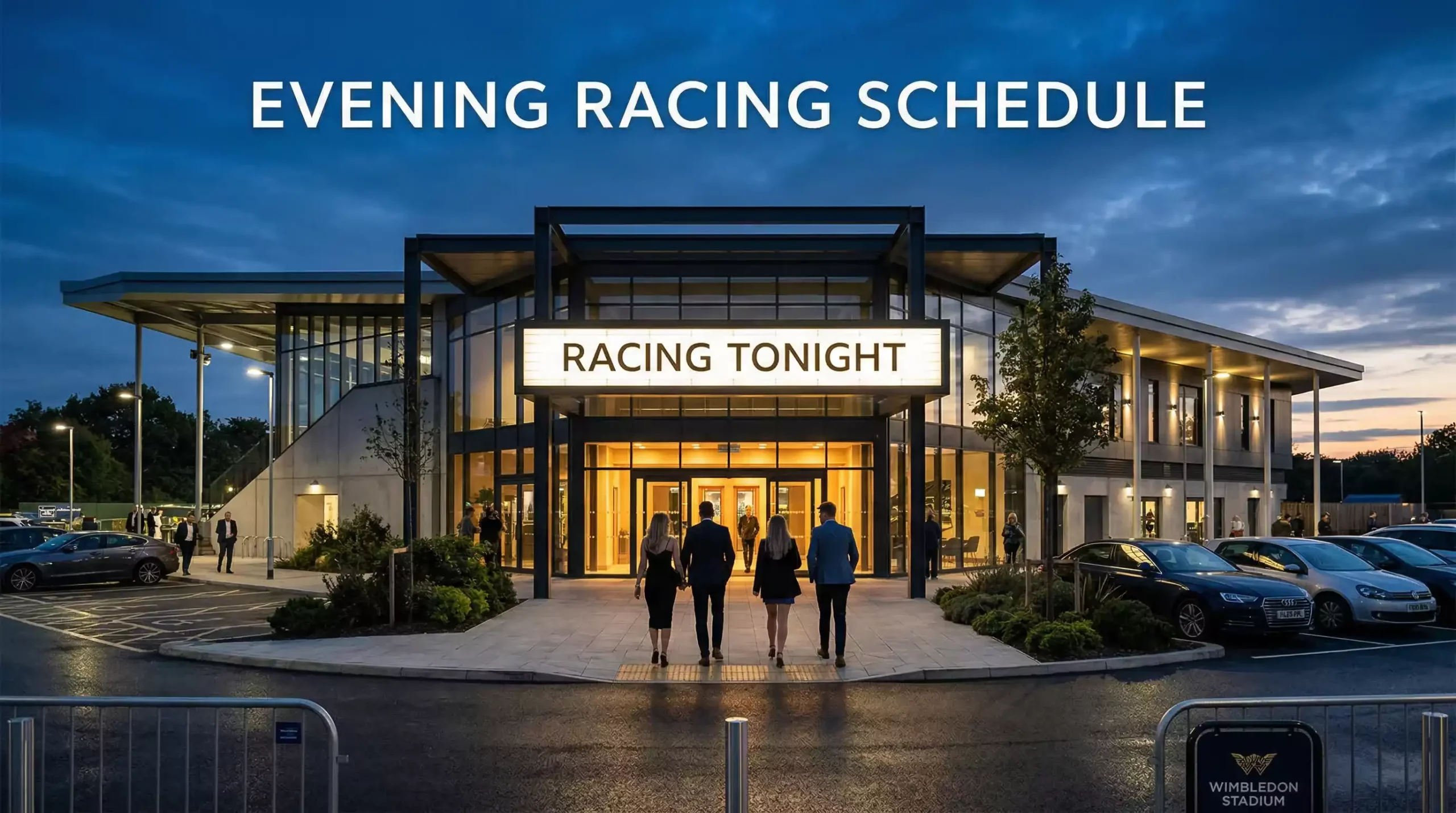
Nottingham’s Weekly Racing Calendar: Every Session Mapped
The Nottingham greyhound racing schedule runs four days a week across two distinct session types, and knowing exactly when each meeting starts — not roughly, but precisely — is the foundation of any serious approach to Colwick Park’s cards. Miss the first race by five minutes and you’ve already lost one betting opportunity. Arrive expecting an evening session on a Wednesday and you’ll find the stadium dark. The schedule is consistent, but it has enough variation between sessions that assumptions cost money.
Nottingham’s weekly programme includes four Category 1 events spread across the year — the highest tier of competition in British greyhound racing — alongside its regular graded fixtures. The 2024 calendar featured the BGBF Breeders’ Stakes, the JenningsBet Puppy Classic, the JenningsBet Select Stakes, and the Premier Greyhound Racing Eclipse. These flagship meetings sit within the normal weekly rhythm but carry elevated prize money, stronger fields, and full television coverage.
What follows is a complete mapping of Nottingham’s racing calendar: every weekly slot, every major fixture, and every exception that can disrupt the routine.
Monday, Wednesday, Thursday, Friday: What Each Session Offers
Monday evening is Nottingham’s bread-and-butter racing night. First race at 18:37, with a full card of typically twelve races running through to around 21:46. The fields are competitive — mostly A1 through A5 graded races, with the occasional Open race slotted in when the card is strong enough. Monday nights draw consistent betting turnover, and the PGR stream ensures coverage across all major bookmaker platforms. As David Evans, General Manager at Nottingham Stadium, has noted, the popular Monday and Friday night racing slots remain central to the stadium’s identity and schedule.
Wednesday morning operates on a completely different rhythm. These are BAGS meetings — Bookmakers’ Afternoon Greyhound Service — designed primarily to provide content for the betting shop and online betting schedules. The first race goes off in the morning, and the card wraps up well before the afternoon. Fields tend to be weaker than evening sessions: more lower-graded races, more dogs stepping down in class, more trainers using the fixture as a developmental run for their less experienced runners. For punters, the lower grade doesn’t mean less opportunity — it means different opportunity. Predictability tends to be higher in BAGS races because the speed differentials between dogs are larger, making form analysis more decisive.
Thursday morning mirrors the Wednesday format. First race at 11:09, and the card runs through to early afternoon. Again, these are BAGS meetings with similar field quality and structure. The Thursday slot is particularly useful for trainers who want to give a dog a quick turnaround before the following week’s evening meetings. If a dog runs on Thursday morning and appears again on Monday night, that’s a five-day gap — tight but manageable for a fit animal. Check whether the dog showed signs of fatigue in the Thursday run before backing it on the Monday.
Friday evening is the premium session. First race at 18:08 — slightly earlier than Monday’s 18:37 — but the card often carries an extra edge in quality. Friday nights at Colwick Park tend to feature the best-graded races of the week, the strongest fields, and the biggest evening crowds for those attending in person. Open races and invitational events are more likely to appear on a Friday. It’s the session where trainers bring their best dogs, knowing the opposition will be genuine and the times meaningful. For betting purposes, Friday form is generally the most reliable guide to a dog’s true ability within the Nottingham environment.
The four-day structure means Nottingham produces racing data almost continuously. Monday’s results inform Wednesday’s analysis. Thursday’s form feeds into Friday’s card. The only gap is the weekend — Saturday and Sunday are dark — which gives punters and dogs alike a chance to reset before the cycle restarts.
Annual Fixture Highlights: Category 1 Events and Special Meetings
Beyond the weekly grind, Nottingham’s annual calendar is punctuated by four Category 1 events — competitions that represent the pinnacle of greyhound racing and attract dogs from across the UK.
The BGBF Breeders’ Stakes, typically staged in March, celebrates breeding excellence. The competition recognises sires and dams whose progeny have demonstrated outstanding track ability, making it a fixture that appeals to the breeding and ownership community as much as to punters. It’s the first Category 1 of Nottingham’s calendar year, and it sets the tone for the stadium’s prestige programme.
The JenningsBet Select Stakes and JenningsBet Puppy Classic run together, usually in August during National Greyhound Week. The Select Stakes is Nottingham’s flagship invited competition. In 2024, its first-place prize money reached a record £12,500 — the highest in the event’s history. The Puppy Classic, carrying matching prize money, showcases the next generation of talent, featuring dogs under two years old in a field that offers an early look at future stars.
The Premier Greyhound Racing Eclipse, typically held in November, closes the Category 1 season at Colwick Park. It’s an invitational event sponsored by the PGR joint venture, and it carries the weight of significant media coverage through the PGR broadcast network.
These four events are always televised, always well-attended, and always produce the strongest fields Nottingham stages in any given year. If you’re planning your racing calendar around the biggest occasions at Colwick Park, these are the dates to mark first. The exact fixture dates are usually confirmed by the stadium in January, published on the official website, and added to the bookmaker calendars shortly afterwards.
Bank Holidays, Seasonal Adjustments and Cancellations
Nottingham’s weekly schedule is reliable, but it’s not immune to disruption. Bank holidays are the most common cause of fixture changes. When a bank holiday falls on a Monday, the evening meeting may be moved to an earlier start time, rescheduled to a different day, or cancelled entirely if the holiday programme at neighbouring tracks creates scheduling conflicts. Easter, Christmas, and the August bank holiday are the dates most likely to affect the standard rhythm.
Weather rarely causes cancellations at Nottingham because the track uses a sand surface rather than grass, which drains well and remains raceable in conditions that would stop play at many horse racing venues. However, extreme cold can affect the track. If temperatures drop far enough to freeze the sand surface, the meeting will be abandoned on welfare grounds — frozen sand is harder underfoot and increases the risk of injury. These cancellations are rare but not unheard of during January and February.
Wind is a more subtle factor. Colwick Park sits in an exposed position near the Trent, and strong crosswinds can affect the running of races without causing a cancellation. Dogs on the outside of the track — particularly in the back straight — can face a headwind that their inside rivals are shielded from. This doesn’t change the schedule, but it changes the results, and it’s worth checking the weather forecast for Nottingham before finalising your selections for the evening.
When a meeting is cancelled, the bookmaker markets are voided and all bets are returned. Any dogs entered for the abandoned card will typically reappear at the next available meeting, though their trap draw may change. If you’ve done your form work for a cancelled meeting, keep your notes — the analysis applies to the next time those dogs run, and the market will reprice without the advantage of your preparation.
The wider context is set out in our Nottingham dog results guide.
Tonight’s card is previewed in Nottingham dogs tonight.
