

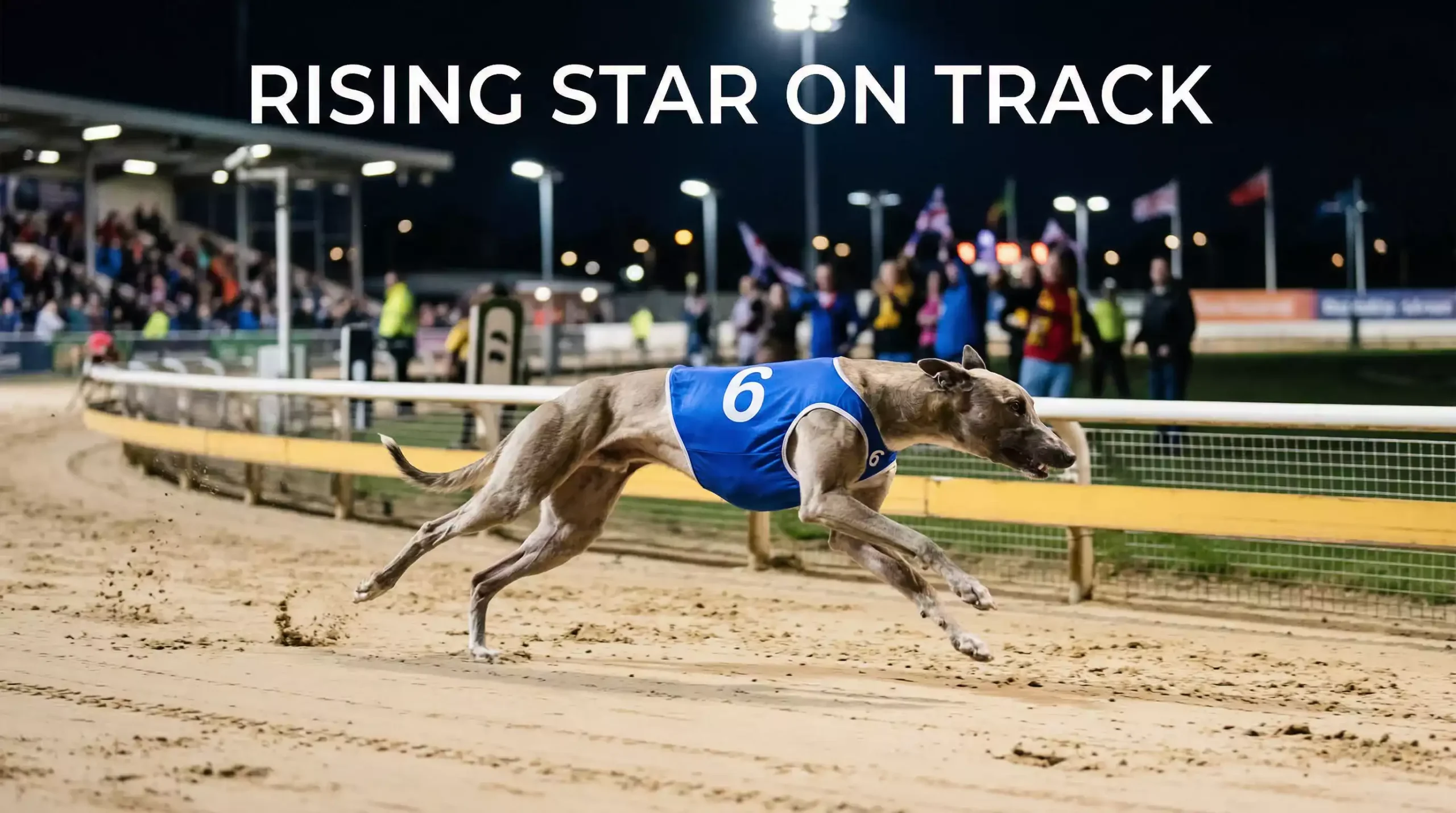
Two Category 1 Nights That Light Up the Nottingham Calendar
The Nottingham Eclipse and Puppy Classic are two of the four Category 1 events staged at Colwick Park each year — the highest classification in British greyhound racing, reserved for competitions that attract the strongest fields and carry the most significant prize money. Together with the Select Stakes and the BGBF Breeders’ Stakes, they give Nottingham a quartet of flagship fixtures that no other track in the Midlands can match.
In 2024, all four Category 1 events ran at Nottingham: the Breeders’ Stakes in March, the Select Stakes and Puppy Classic in August, and the Eclipse in November. That calendar spread means Colwick Park stages at least one major event in every season, maintaining the stadium’s presence in the national greyhound conversation throughout the year rather than relying on a single headline night.
Each event has a different character, a different field profile, and a different appeal for punters. The Eclipse is an established invitational with a competition pedigree. The Puppy Classic showcases dogs under two years old — the future stars of the sport. And the Breeders’ Stakes celebrates the bloodlines behind the dogs, adding a dimension that most other competitions ignore entirely.
The Premier Greyhound Racing Eclipse: Format and Winners
The Premier Greyhound Racing Eclipse is Nottingham’s late-season showpiece, typically staged in November as the final Category 1 event of the calendar year at Colwick Park. It carries the PGR brand — a direct consequence of the Entain and Arena Racing Company joint venture that has reshaped the commercial landscape of British greyhound racing since January 2024. PGR’s investment of more than £2.5 million into Open Race prize funds across its stadiums has given events like the Eclipse a financial backing that previous incarnations lacked.
The Eclipse operates as an invited competition, similar in format to the Select Stakes. Trainers submit their best dogs for consideration, and the organisers assemble a field that reflects the highest quality available at the time. Because the Eclipse falls in November, the field often includes dogs that have been in peak form during the autumn season — animals that have sharpened their speed through a summer of competitive racing and are hitting their best times as the year closes out.
For punters, the Eclipse presents a specific analytical challenge. Autumn and early winter racing at Nottingham can be affected by changing track conditions as temperatures drop and rainfall increases. The sand surface at Colwick Park handles wet weather well, but a heavy going allowance shifts the advantage towards dogs with natural stamina rather than pure sprinters. Selections for the Eclipse should account for the conditions as much as the form — a dog that has been running its best times on dry sand in September might struggle to reproduce that speed on a cold, damp November evening.
The Newinn Syd Eclipse triumph in the most recent edition — acknowledged by David Evans as one of the highlights of a “bumper year” at the stadium — demonstrated what the event can produce: a champion-calibre dog winning under pressure against a quality field, with the full weight of PGR broadcast coverage behind it. These are the performances that define a track’s calendar, and the Eclipse has established itself as Nottingham’s premier autumn fixture.
JenningsBet Puppy Classic: The Next Generation Showcase
The JenningsBet Puppy Classic occupies a unique space in Nottingham’s Category 1 programme. While the Select Stakes and Eclipse invite the best open-age dogs, the Puppy Classic is restricted to greyhounds under two years old — the sport’s next generation, racing at the highest level before many of them have reached full physical maturity.
The competition carries prize money of £12,500 to the winner, matching the Select Stakes and confirming the event’s status as a top-tier fixture. For owners and breeders, a Puppy Classic victory is especially prized because it signals exceptional early talent — a dog that can compete at Category 1 level before its second birthday is one with genuine long-term potential. Some of the sport’s best greyhounds have announced themselves through Puppy Classic wins at various tracks before going on to contest the English Greyhound Derby and other major championships.
From a punting perspective, the Puppy Classic demands a different approach than an open-age event. Young dogs are less predictable. Their form lines are shorter — sometimes only ten or fifteen races — which means the sample size for analysis is limited. Improvement between races is more common and more dramatic in young dogs; a puppy that ran 29.50 over 500m three weeks ago might clock 29.10 on Puppy Classic night because it’s physically maturing between outings. That volatility makes the Puppy Classic harder to assess but also creates opportunities for punters who are willing to look beyond the bare numbers.
Trainer form becomes especially important in the Puppy Classic. Handlers who specialise in developing young dogs tend to dominate these events year after year, because their kennel routines, training methods, and ability to manage a young dog’s peak are refined through experience. Checking which trainers have historically produced Puppy Classic finalists at Nottingham is a shortcut to the most likely contenders.
BGBF Breeders’ Stakes: Celebrating Breeding Excellence
The BGBF Breeders’ Stakes rounds out Nottingham’s Category 1 quartet with an event that celebrates the other side of greyhound racing: the breeding programmes and bloodlines that produce the dogs in the first place. Staged in March — the first Category 1 of the calendar year at Colwick Park — the Breeders’ Stakes recognises sires, dams, and breeders whose stock has performed at the highest level.
The competition format differs from the Select Stakes and Eclipse in its eligibility criteria. While those events invite dogs purely on current form and speed, the Breeders’ Stakes factors in pedigree and breeding credentials. This introduces a layer of interest that purely performance-based events lack: you’re not just evaluating the dog in front of you, you’re evaluating the genetic programme that produced it. For the breeding community — the 15,000 registered owners and the sire and dam lines they invest in — the Breeders’ Stakes is one of the few Category 1 events that directly acknowledges their contribution to the sport.
The prize money context is worth noting. The English Greyhound Derby offers £175,000 to the winner — the richest prize in British greyhound racing by a considerable margin. The Breeders’ Stakes doesn’t compete at that level, but within the Nottingham programme, it carries the same Category 1 prestige as the Select Stakes, Puppy Classic, and Eclipse. And for breeders, the reputational value of a Breeders’ Stakes win extends beyond the prize cheque: a victorious sire line can command higher stud fees, and a successful dam can attract more discerning buyers for future litters.
As a betting event, the Breeders’ Stakes offers a field where pedigree data is more relevant than usual. Dogs from proven sire lines that are suited to Nottingham’s 437-metre circumference and sand surface hold an advantage that goes beyond their individual form figures. If a sire’s progeny consistently perform well at Colwick Park — quick away, comfortable on tight bends, strong finishers — then a new representative from that bloodline entering the Breeders’ Stakes deserves closer attention than the morning prices might suggest.
The wider context is set out in our Nottingham dog results guide.
