

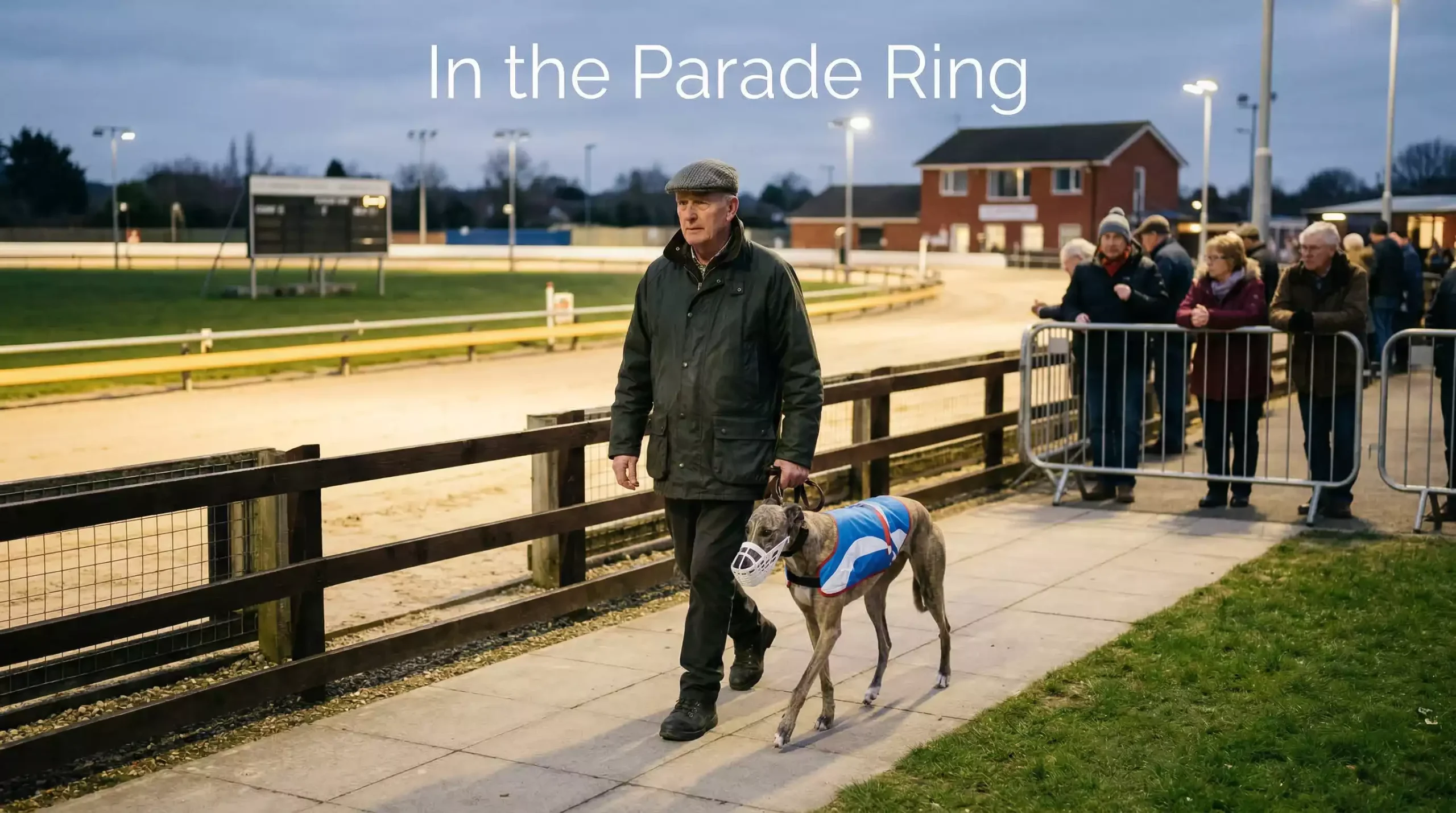
Why the Trainer’s Name Matters as Much as the Dog’s Form
Greyhound trainer statistics occupy a blind spot for most casual punters. The racecard lists the trainer’s name next to every dog, yet the typical betting decision skips straight past it to the time, trap, and grade. That’s a missed opportunity. Across the UK’s licensed racing programme, approximately 500 trainers are registered with the GBGB, supported by around 3,000 kennel staff. Those 500 handlers vary enormously in ability, method, and track-specific expertise — and the gap between a top-tier trainer and an average one is wide enough to affect race outcomes in measurable ways.
A trainer’s influence extends beyond the obvious. They decide when a dog races, at which track, over which distance, and in which grade. They control the dog’s fitness regime, diet, weight management, and recovery between outings. They read the racecard for their own entries and choose which races give their dogs the best chance. A shrewd trainer with a moderate dog will produce better results than a mediocre trainer with a fast one — not every time, but often enough for the pattern to show in the data.
This article explains how to read trainer statistics, where to find them, and how to integrate trainer form into your selections at Nottingham.
Understanding Trainer Strike Rates and What They Hide
The headline metric for any trainer is the strike rate — the percentage of runners that win. A trainer running 200 dogs in a season and producing 40 winners has a 20% strike rate. That sounds reasonable until you consider that the theoretical average in a six-dog field is 16.7%. A 20% strike rate means the trainer is producing winners at a rate only slightly above average, which could reflect competence without brilliance.
The truly informative numbers sit beneath the headline. A trainer’s strike rate at a specific track can differ dramatically from their overall rate. A handler might operate at 18% nationally but 28% at Nottingham because their kennel is located nearby, their dogs train on a similar surface, and they’ve learned the track’s quirks over years of regular entries. Conversely, a trainer might show a strong national rate that collapses at certain venues where the track configuration doesn’t suit their dogs’ running styles.
Strike rate by grade is another layer worth peeling back. Some trainers excel at the A1–A3 level, where their best dogs compete against quality opposition and the trainer’s skill in preparation makes the difference. Other trainers post their best numbers in the lower grades, where their ability to spot dropping-in opportunities and place dogs in winnable races generates consistent returns. Neither approach is inherently better — they reflect different business models within the training profession.
The metric that strike rates hide most effectively is profitability. A trainer with a 25% strike rate whose winners all start at odds-on is less valuable to a punter than a trainer with an 18% strike rate whose winners consistently return 3/1 or better. The second trainer’s lower win rate is more than compensated by the prices their dogs start at. When you evaluate trainer statistics, ask not just how often they win but what the market thinks of their runners before the race. A trainer whose dogs are routinely underestimated by the bookmakers is the one to follow.
Time-of-day patterns add yet another dimension. Some trainers perform disproportionately well at evening meetings, where the competitive level is higher and the form book is more reliable. Others thrive at morning BAGS meetings, where the weaker fields reward trainers who can identify and exploit grade mismatches. At Nottingham, where the schedule includes both evening and morning sessions, tracking a trainer’s performance by session type can reveal patterns invisible in the aggregate numbers.
Trainers Who Thrive at Nottingham
Every track has its specialists — trainers whose runners consistently outperform expectation at that specific venue. At Nottingham, with its 437-metre circumference, sand surface, and eight-distance programme, the specialists tend to be handlers based within a reasonable travelling radius of Colwick Park who run dogs there frequently enough to understand how the track plays in different conditions.
A Nottingham specialist trainer typically displays several identifying characteristics. Their dogs show a higher win rate at Colwick Park than at other tracks. They enter dogs over the distances that suit the Nottingham circuit — often favouring the 480m and 500m trips where their familiarity with the track’s bend geometry gives them an edge in placing dogs in the correct grade. And they time their entries to coincide with track conditions that suit their dogs’ running styles, pulling entries when the going is against them and loading up when conditions are favourable.
Identifying these trainers requires tracking data over a period of months rather than relying on a single meeting’s results. Most form databases allow filtering by trainer and track, which produces a win-and-place record that highlights handlers who consistently deliver at Nottingham. A trainer showing a 25% win rate at Colwick Park from 80 or more runners has a sample size large enough to be meaningful, and that advantage is unlikely to be random.
The practical application is simple: when a known Nottingham specialist sends a dog to the track, give that runner additional weight in your analysis. The trainer knows the surface, knows the bend angles, knows which trap draws suit which running styles over which distances, and has made a deliberate decision to enter the dog on this card rather than waiting for a meeting elsewhere. That institutional knowledge doesn’t appear on the racecard, but it influences the outcome.
Adding Trainer Data to Your Form Analysis
Trainer form shouldn’t replace dog form — it should supplement it. The most effective approach is to complete your standard form analysis first (times, grades, trap draw, running comments) and then overlay the trainer dimension as a final filter. Think of it as a tiebreaker with predictive power: when two dogs look level on every other metric, the trainer edge can resolve the deadlock.
If two dogs in a race appear evenly matched on form, and one is trained by a handler with a strong Nottingham strike rate while the other comes from a kennel with no track-specific advantage, the trainer edge tips the balance. If the trainer’s dog also draws a favourable trap and shows consistent form comments, the selection case strengthens further. Trainer data rarely makes a weak form case into a strong one, but it regularly separates two similar cases into a clear preference.
Be cautious about over-weighting trainer reputation without checking the recent data. A trainer who dominated Nottingham three years ago may have lost key dogs, changed their kennel operation, or shifted their focus to other tracks. Trainer form, like dog form, has a shelf life, and the most relevant data is from the last three to six months. Check the current season’s numbers, not the career record, and adjust your assessment accordingly. The trainer who matters is the one performing now, at this track, with the dogs currently in the kennel — not the one whose historical record looks impressive but whose recent results have gone quiet.
The wider context is set out in our Nottingham dog results guide.
