

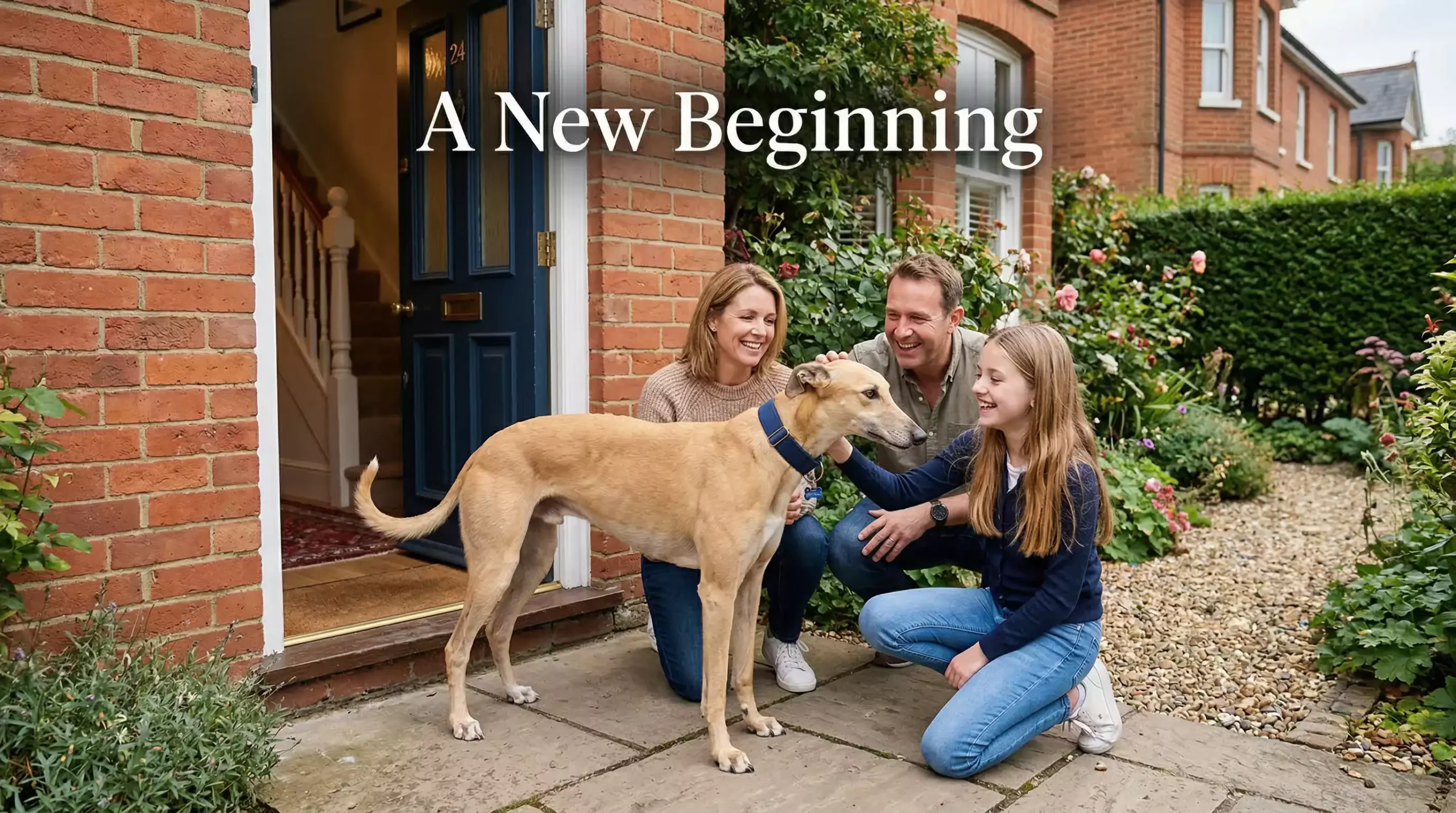
From Racer to Family Pet: The Adoption Journey
Greyhound adoption after racing is one of the most positive developments in British dog welfare over the past decade. The pathway from track to sofa has been formalised, funded, and monitored to a degree that would have been unthinkable twenty years ago. In 2024, 94% of greyhounds leaving the licensed racing programme were successfully retired into homes — up from 88% when the GBGB began publishing standardised data in 2018. The number of dogs euthanised for economic reasons has collapsed from 175 to just 3 over the same period.
Those statistics represent a system that is working, though advocates on both sides of the welfare debate will argue about whether the system should need to exist at all. What’s beyond argument is that thousands of retired greyhounds are available for adoption each year, and that these dogs make remarkably good pets for the right households. This guide covers the rehoming process, what life with an ex-racer is actually like, and how to find an approved adoption centre near you.
How the Rehoming Process Works Through GBGB Centres
The GBGB operates a network of approved homing centres across England, each staffed by people with direct experience of retired greyhounds and the temperamental range they exhibit. The centres receive dogs from trainers and owners who have completed their dogs’ racing careers and are required, under GBGB rules, to ensure a satisfactory rehoming outcome.
The financial mechanism behind the system is the Greyhound Retirement Scheme bond. Every registered greyhound is covered by a bond — currently set at £420, raised from £400 in 2025 — that the owner forfeits if they fail to demonstrate that the dog has been retired responsibly. The bond creates a financial incentive to engage with the rehoming system rather than abandon the dog at the end of its racing career. The increase to £420 signals the GBGB’s intention to keep strengthening the obligation.
Adoptions from approved centres surged by 37% in the first half of 2025 compared to the same period in 2024. That growth reflects several converging factors: increased public awareness through the sport’s centenary celebrations, the Greyhound Racing UK platform’s audience-building efforts, and the enduring appeal of greyhounds as pets among people who may have no connection to racing whatsoever. Many adopters discover the breed through social media, where the “retired greyhound as house pet” community is vocal, enthusiastic, and highly effective at showcasing the dogs’ domestic temperament.
The process for adopting is designed to be thorough but not bureaucratic. Prospective adopters typically complete an application form, undergo a home visit or assessment, and are matched with a suitable dog based on their living situation, family composition, and experience with dogs. The centres assess each retired greyhound’s temperament, sociability with other animals (particularly cats and small dogs), and any specific needs arising from injuries sustained during its racing career. This matching process is important: not every greyhound suits every household, and the centres take the time to get the pairing right.
Life With a Retired Greyhound: Temperament, Exercise and Health
The gap between what people expect from a retired racing greyhound and what they actually get is one of the wider disconnects in the dog world. The expectation — informed by the sight of lean, muscular dogs sprinting at 40 mph around a track — is a high-energy animal that needs hours of daily exercise. The reality is a dog that will sleep for eighteen hours a day, claim the softest surface in your house as its personal territory, and regard a twenty-minute walk as a perfectly adequate outing.
Retired greyhounds are, by temperament, gentle, quiet, and low-maintenance. They rarely bark. They’re typically good with children, having been socialised to human contact throughout their racing careers. They don’t require the kind of intensive mental stimulation that working breeds demand — no agility courses, no puzzle feeders, no three-hour hikes. A retired greyhound wants a warm bed, two moderate walks a day, regular meals, and the company of its people. That profile makes them excellent pets for working adults, older people, and families who want a calm presence in the house rather than a canine project.
There are adjustments to manage. Many retired greyhounds have never lived in a domestic environment. Stairs may be unfamiliar. Glass doors can be confusing. The sound of a washing machine or a television might provoke initial anxiety. Cats and small animals require careful introduction, because the dogs have spent their careers chasing a mechanical lure and the prey instinct varies in strength between individuals. Some retired greyhounds coexist happily with cats from day one; others never lose the impulse to chase, and the homing centre assessment is designed to identify which category a specific dog falls into.
Health considerations are generally manageable. Greyhounds are a robust breed with relatively few genetic health issues compared to many pedigree dogs. Their lean physique means they’re sensitive to cold — a coat for winter walks is a practical necessity, not an affectation. Dental health is the area most likely to require veterinary attention, as racing greyhounds are prone to tartar buildup that benefits from professional cleaning. Joint issues can arise in older dogs or those who sustained injuries during their careers, but the Injury Retirement Scheme’s veterinary funding has addressed many of these cases before the dog reaches the adoption stage.
Finding an Approved Rehoming Centre Near You
The GBGB maintains a list of approved homing centres on its website, and the Greyhound Racing UK platform also provides links to rehoming resources. Centres are distributed across England, with concentrations in regions where racing tracks are located — the Midlands, the North, and the Southeast. If you don’t live near a centre, many organisations can arrange transport for suitable matches, particularly for dogs that have been waiting longer for a home.
Beyond the GBGB-approved network, independent greyhound rescue charities operate across the UK. These organisations are not affiliated with the racing industry but perform the same function: assessing, rehabilitating, and rehoming retired greyhounds. Some specialise in dogs with specific needs — injury recovery, socialisation challenges, or advanced age — and they provide an alternative route for people who prefer to adopt through an independent charity rather than an industry-linked centre.
The financial commitment of adoption is modest. Homing centres typically charge a rehoming fee that covers neutering, vaccinations, microchipping, and an initial health check. The fee varies between centres but is substantially less than the cost of buying a puppy from a breeder. The GBGB’s Injury Retirement Scheme — which has distributed nearly £1.5 million since 2018 for veterinary treatment of track injuries — means that many dogs arrive at homing centres with their medical needs already addressed, reducing the initial health costs for adopters.
If you’re considering adopting, the first step is to visit a centre and meet the dogs. Greyhounds have individual personalities that don’t reduce to breed generalisations, and the dog that’s right for your household is the one you connect with in person — not the one that looks best in a photograph. The centres welcome visits, and the staff are experienced at reading both the dogs and the prospective adopters. The matching process works best when it’s collaborative, and the people who run these centres have seen enough successful placements to know what a good match looks like.
The wider context is set out in our Nottingham dog results guide.
